There is a particular kind of skincare content produced for women over fifty. It tends to rely heavily on words like "fight," "reverse," "correct," and "battle." The underlying message, delivered with varying degrees of subtlety, is that your skin has become a problem and the clock is running out on your ability to fix it.
This post is not that.
What follows is what the science actually shows about skin physiology after menopause — and a honest argument for why the conversation about mature skin needs to change register entirely.
What actually happens after menopause
Estrogen has receptors throughout the skin — in keratinocytes, fibroblasts, and sebaceous glands. When estrogen levels decline during and after menopause, the effects are distributed across the skin's full architecture:
Collagen loss accelerates. The steady 1% annual decline of earlier decades sharpens: research suggests approximately 30% of dermal collagen is lost in the first five years after menopause, with continued decline thereafter. This affects skin volume, resilience, and healing speed. It is real, measurable, and worth understanding as biology — not as verdict.
Hyaluronic acid content decreases. Estrogen plays a role in HA synthesis. Its decline means the dermis retains water less effectively, and skin that was never dry may become noticeably dry. This is not a hydration failure — it is a changed baseline that requires adjusted support.
The skin barrier shifts. Sebum production decreases with estrogen decline, which means the lipid matrix that waterproofs the skin surface is working with less raw material. Skin becomes more porous, more permeable to irritants, and more susceptible to TEWL (transepidermal water loss). Products that were tolerated comfortably at 40 may cause sensitivity at 55 — not because the products changed, but because the barrier's capacity to handle them did.
Cell turnover slows further. The 35-to-45-day epidermal turnover of the late 30s and 40s extends again. Dullness, uneven texture, and longer recovery from redness or irritation are the perceptible signs of this. Gentle, infrequent exfoliation becomes more important — and aggressive exfoliation becomes more harmful.
The over-treatment problem
A significant portion of the women over 50 who report that skincare "stopped working" are in a cycle of over-treatment. The dynamic is understandable: skin feels different, products feel less effective, the marketing intensifies. The response is to add — more actives, higher concentrations, more frequent exfoliation, more products promising correction.
But post-menopausal skin is not calling for more aggression. It is calling for more support. A barrier that is working harder to stay intact does not benefit from retinoids used four nights a week, daily exfoliation, and a vitamin C at maximum concentration. It benefits from ceramides, consistent hydration, and reduced abrasion.
The most common cycle we see: AHA or retinoid use causing sensitivity, sensitivity being misread as a new skin condition, more products being added to address the sensitivity, the new products causing further disruption. The exit from this cycle is almost always subtraction, not addition.
What the evidence actually supports
Post-menopausal skin responds best to a focused stack of genuinely supportive ingredients:
- ◦Ceramide-rich moisturizers. Essential, not optional. The lipid matrix needs direct replenishment. A ceramide moisturizer used twice daily is one of the highest-leverage interventions available and dramatically underused relative to more aggressively marketed alternatives.
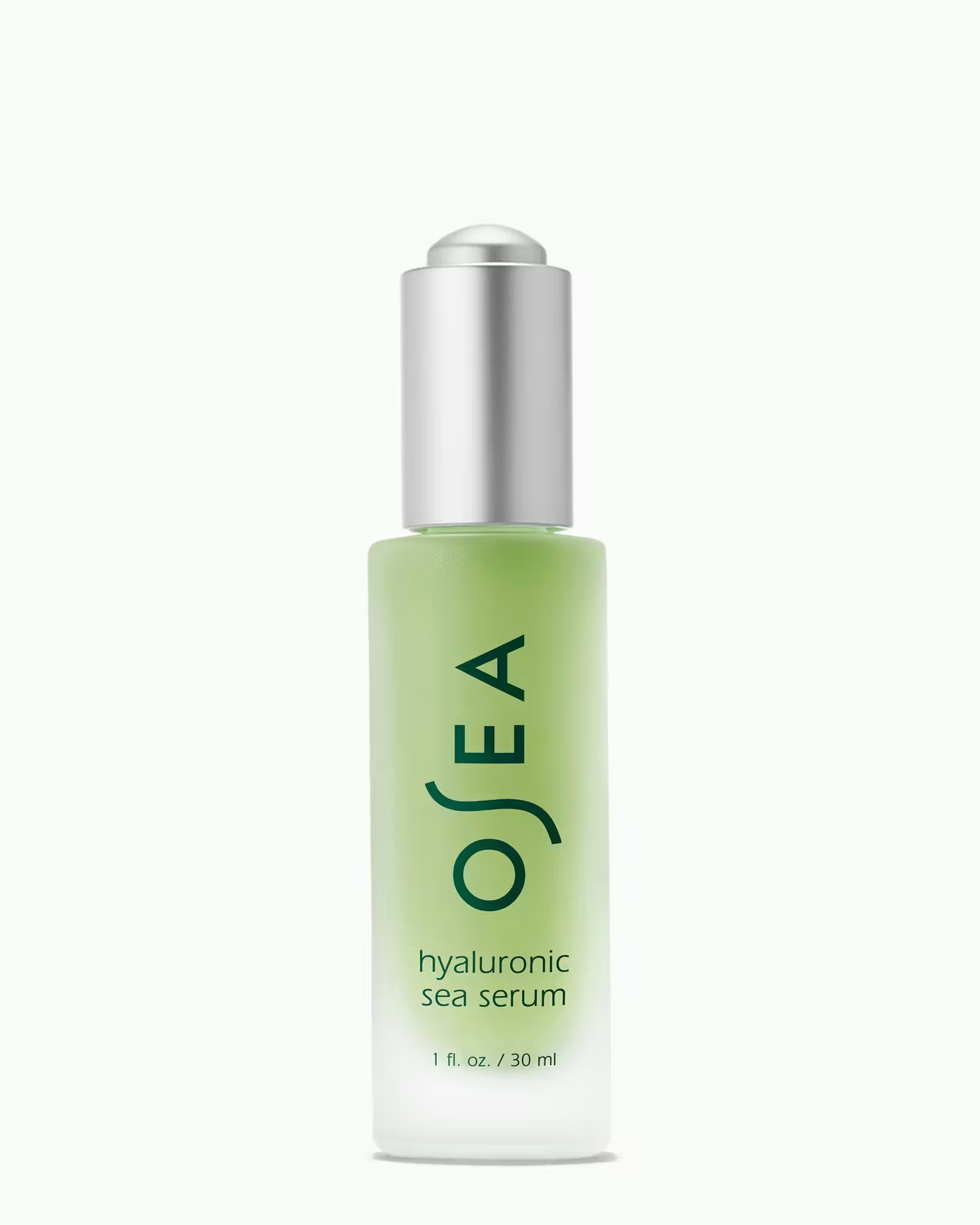
- ◦Hyaluronic acid at multiple molecular weights. Applied to damp skin, sealed with an occlusive. The multi-weight approach — high molecular weight at the surface, low molecular weight penetrating deeper — compensates for declining dermal HA content more effectively than single-weight formulas. The OSEA Hyaluronic Sea Serum, which uses three HA weights in a seaweed base, is the product we consistently recommend at this stage.
- ◦Peptides. Signal peptides and carrier peptides support structural protein synthesis with a gentler mechanism than retinoids — important for skin whose barrier tolerance has changed. Copper peptides in particular have growing evidence for supporting both collagen and elastin.
- ◦SPF, every morning. Post-menopausal skin heals more slowly from UV damage and has less structural reserve against photoaging. The case for daily SPF, already strong, becomes stronger after 50.
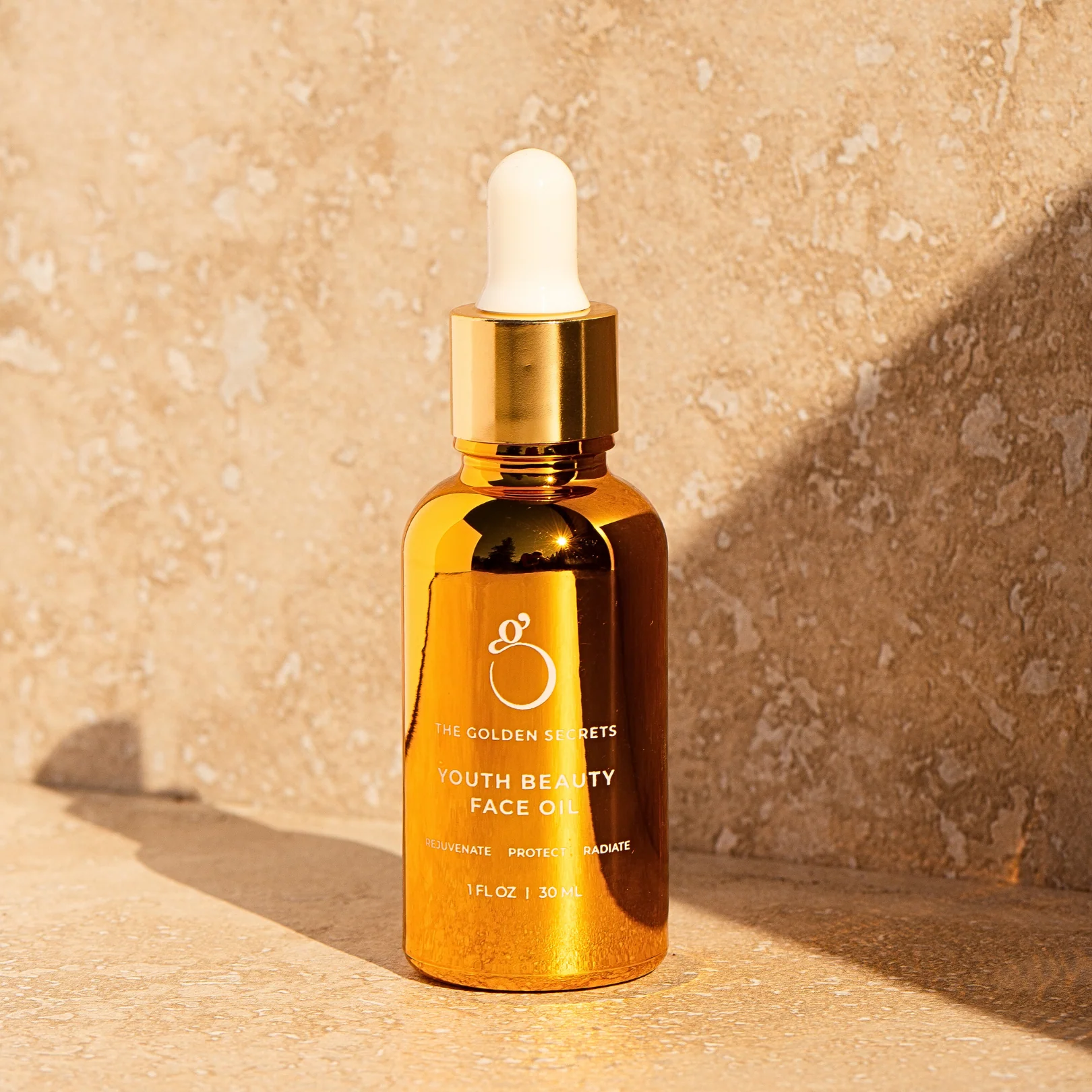
- ◦Face oils. The protective and barrier-sealing benefit of a nourishing face oil becomes proportionally more valuable as sebum production decreases. An Ayurvedic-rooted oil like the Golden Secrets Youth Beauty Face Oil provides both barrier support and antioxidant coverage in one step.
- ◦Gentle retinoid, if tolerated. The evidence for retinoids supporting collagen synthesis remains among the strongest in OTC skincare, and it does not expire after 50. The key word is gentle: introduction should be slower than at earlier decades, concentrations should be lower, and any sign of barrier disruption is a signal to pause rather than persist.
What to let go of
Daily or aggressive exfoliation. The slowing cell turnover of post-menopausal skin is real, and exfoliation can support it — but the turnover rate that now takes 60 or more days cannot be safely forced toward a 28-day pace. Once to twice weekly at low concentrations is the appropriate ceiling.
Multiple actives used simultaneously. The baroque ten-step routine that some skin tolerates at 35 is not what post-menopausal skin is asking for. Three to four consistently used, genuinely supportive products will outperform ten competing actives every time.
Products marketed primarily on fear. "Age-fighting." "Time-reversing." "Erasing years." These phrases are designed to sell from anxiety, not to inform a good skincare decision. Any product whose primary marketing language is about what it fights rather than what it supports deserves extra scrutiny on the ingredient list.
The part nobody says
Mature skin has earned everything it shows. The texture, the lines, the way skin settles over decades of expression and weather and sleep and laughter — these are not malfunctions. They are a record. The conversation worth having is not "how do I look younger" but "how does my skin feel, and what does it need to feel its best."
Healthy skin at 60 looks like skin that is well-hydrated, comfortable, not reactive, not inflamed, and resilient to daily life. That is achievable with a small number of genuinely supportive products used consistently. It does not require a war. It does not require fear. It requires the same thing good skincare has always required: understanding what the skin actually needs and giving it that, steadily, without drama.
See our full series on skin through the decades: your skin in your 30s and your skin in your 40s.